Posts

Track 7: Nano Dentistry

Image
Extending nanotechnology into the field of dentistry thereby makes Nano dentistry an emerging field with the significant potential to yield a new generation of clinical tools, mate­rials and devices for oral health care. Nano dentistry is said to be the future of dentistry where all procedures are to be per­formed using Nanorobots that may become a replacement to the present day dental assis­tants, technicians & hygienists. The discovery of Nano dental materials such as Nanopowders and Nanocomposites reinforced with Nanofillers are the most rapidly developing group of materials with excellent prospects for application in the field of dentistry. Advantages of Nano Dentistry: Superior hardness, flexural strength, modulus of elasticity, translucency, dura­bility of Nano-dental materials and excel­lent handling properties of all Nano-dental products  Faster and accurate diagnosis of oral dis­eases with small diagnostic machinery A reduced span of treatment procedures...

Track 6: Laser in Dentistry

Image
2nd Annual Congress on Orthodontics and Endodontics July 24-25 2019 | Melbourne, Australia What is laser dentistry? If you’ve never heard of this innovative type of dental care, now is the time to learn. Laser dentistry is a minimally invasive option when you’re facing gum surgery, cavity treatment, or other oral issues. Medical professionals use lasers, which are extremely focused light beams, to alter or remove tissue in small amounts. Laser surgery is not limited to dentistry, but many people have never heard of laser dentistry before having it done. Dentists use lasers in a variety of procedures involving the inside of the mouth, be it to remove overgrown tissue, to reshape the gums, or to whiten teeth. Sometimes, laser dentistry is ideal for children who become anxious or afraid when having dental work done. What Laser Dentistry Can Treat: Most issues laser dentistry treats are related to gums. Some of these include: Canker sore and cold sore pain treatments. Tre...

Track 5: Oral and Maxillofacial surgery

Image
Oral and Maxillofacial Surgeons are specialists in the diagnosis and treatment of a broad range of disorders affecting the facial complex and skeleton, including the jaws and oral cavity. Contemporary training in both medicine and dentistry enables oral & maxillofacial surgeons to treat conditions requiring expertise in both fields. These include a range of common oral surgical problems (eg. impacted teeth, dental implants), jaw and congenital facial disproportion, facial trauma, oral cancer, salivary gland disease, temporomandibular joint disorders, and various benign pathologies (eg. cysts and tumors of the jaws). What oral and maxillofacial surgeons do: Provide safe and effective office  anesthesia . Extract impacted and nonrestorable teeth ( dentoalveolar surgery ) Replace lost teeth ( dental implants ) Perform corrective jaw surgery ( orthognathic jaw surgery ) Remove complex tumors ( oncologic surgery ) Rebuild faces damaged by injury or ...

Track 4: Pediatric Dentistry

Image
Orthodontics and Endodontics 2019 Pediatric Dentists are dedicated to the oral health of children from infancy through the teen years. They have the experience and qualifications to care for a child’s teeth, gums, and mouth throughout the various stages of childhood. Children begin to get their baby teeth during the first 6 months of life. By age 6 or 7 years, they start to lose their first set of teeth, which eventually are replaced by secondary, permanent teeth. Without proper dental care, children face possible oral decay and disease that can cause a lifetime of pain and complications. Today, early childhood dental caries—an infectious disease is 5 times more common in children than asthma and 7 times more common than hay fever. Pediatric dentists provide comprehensive oral health care that includes the following: Infant oral health tests, which include risk assessment for caries in mother and child Preventive dental care including cleaning and fluoride trea...

Track 3: Prosthodontics

Image
The dental specialty of  prosthodontics  involves the diagnosis, treatment planning, restoration and maintenance of conditions associated with lost or missing teeth, as well as the supporting gum, bone and sometimes facial parts Prosthodontists do anything from a single customized front crown with an optimal cosmetic result, to porcelain veneers , all ceramic crowns , all ceramic bridges , implant supported crowns, implant-supported bridges, implant supported dentures (fixed or removable) as well as post-cancer and post-trauma reconstructions. In addition, prosthodontists also treat and manage pain and discomfort relating to endodontics/root canal problems, 'bite' or occlusal problems and Temporomandibular Joint (TMJ) disorders. Wherever necessary a prosthodontist will work together with a dentist and other dental specialists ( Orthodontists , Periodontists , Maxillo-Facial and Oral Surgeons ) to provide patients with the optimal cosmetic...

Track 2: Endodontics

Image
Endodontists are specialists in saving teeth, committed to helping you maintain your natural smile for a lifetime. Their advanced training, specialized techniques, and superior technologies mean you get the highest quality care with the best result — saving your natural teeth! Root canal treatment: Root canal treatment or endodontic treatment is necessary when the center part within the tooth, known as the pulp, housing the blood vessels, nerves and living connective tissues, become infected or inflamed. The root canal procedure is performed to save a damaged or badly infected tooth, instead of extracting it. This procedure is performed by an endodontist or a root canal specialist. The most common causes of tooth damage or infection are, cavities occurring due to plaque accumulation, cracked or broken tooth due to any accidents or trauma, gum diseases, and repeated dental treatment to a particular tooth. These issues can cause pulp inflammation, infection and ...

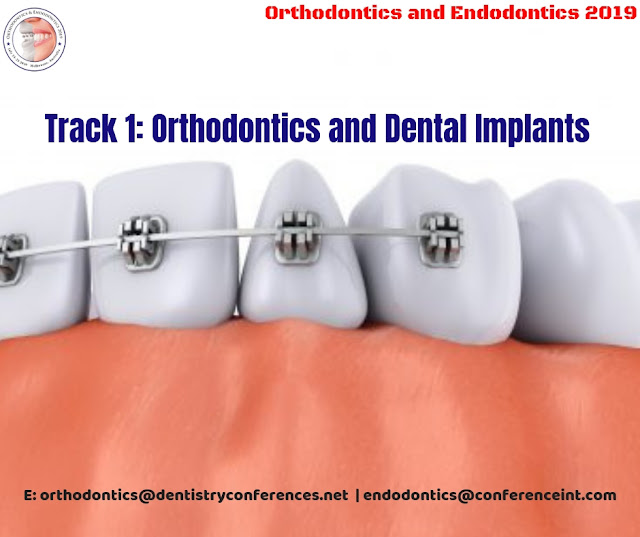
Track 1: Orthodontics and Dental Implants

Image
Orthodontics  is a branch of dentistry that treats malocclusion, a condition in which the teeth are not correctly positioned when the mouth is closed. This results in an improper bite. A dental implant  is a surgical component that interfaces with the bone of the jaw or skull to support a dental prosthesis such as a crown, bridge, denture, facial prosthesis or to act as an orthodontic anchor. Use of Orthodontics :  Closing wide gaps between the teeth Aligning the tips of the teeth Straightening crooked teeth Improving speech or chewing ability Boosting the long-term health of gums and teeth Preventing long-term excessive wear or trauma of the teeth Treating an improper bite Dental Implants can be used : Dental crowns : A dental crown is a replacement tooth that is placed over a post (or an abutment) that is attached to the dental implant. Crowns are usually made of porcelain or ceramic material and are made to match the color of your natural teeth. Den...